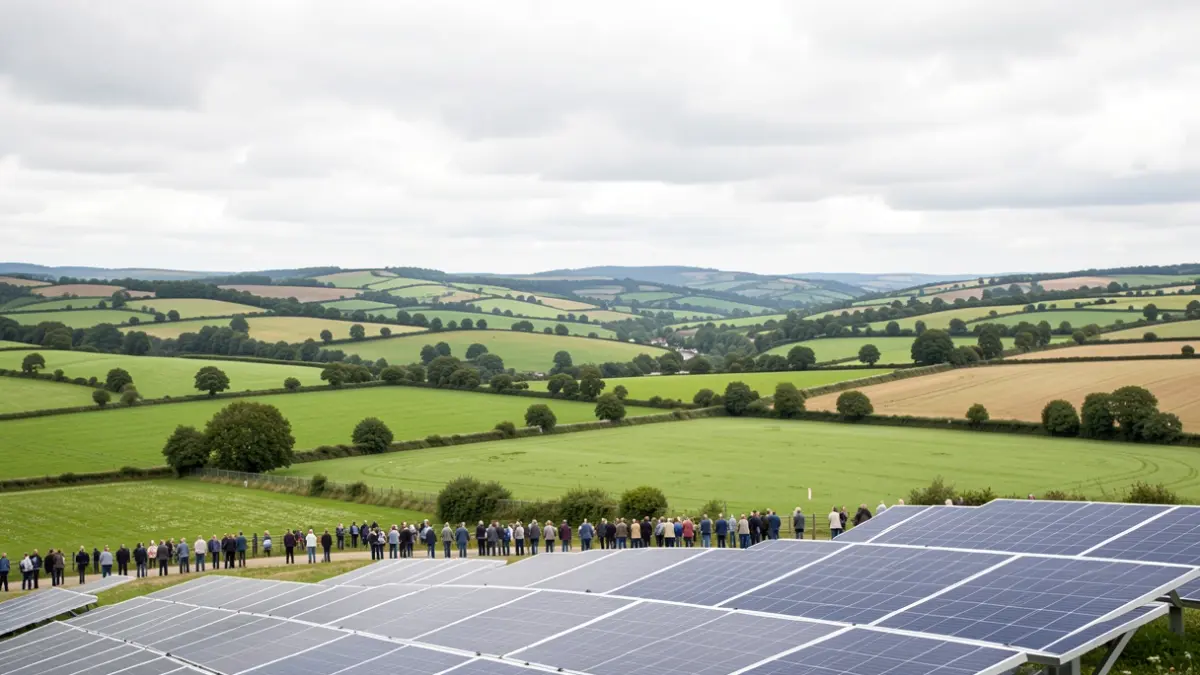
The council's leader, Cllr Bethia Thomas, highlighted worries about the lack of local accountability in the decision-making process for the proposed Cearn Solar Farm, which is planned for an area between Garford, Charney Bassett, West Hanney, Goosey, and Baulking. This concern is amplified by the growing number of nationally significant infrastructure projects (NSIPs) proposed for the district, and their overwhelming cumulative impact.
During a recent full council meeting, questions were raised by Cllr Jill Rayner and Cllr Sally Whiteman, alongside a motion proposed by Cllr Lee Evans, all focusing on the Cearn Solar Farm and the increasing number of NSIPs. The motion, passed with amendments, will lead to Cllr Thomas writing to the Secretary of State for Environment, Food and Rural Affairs and Oxfordshire County Council’s Cabinet Member for Transport.
The Cearn Solar Farm proposal, developed by Cearn Solar Farm Ltd, could span approximately 2,800 acres, making it one of the UK's larger solar farm projects. Due to its scale, the application will be reviewed by the national Planning Inspectorate, with the final decision resting with the Secretary of State, not the district council, which acts as a statutory consultee.
This proposal comes at a time of unusually high concentration of major infrastructure projects in the Vale. These include the proposed White Horse Reservoir (formerly SESRO), the Botley West Solar Farm with a new substation near Farmoor, the East West Rail project, and the Thames to Southern Transfer.
“"We are advocates of renewable power and solar power generation – as shown by our own decarbonisation programme across our leisure centres – but at present there are many questions we still need the answers for on the Cearn Solar Farm. We need to know the full impacts on farmland and on our natural environment. How would the construction traffic management work – especially if the reservoir is being built at the same time? Like Botley Solar Farm, we want to know what community benefits would be on the table for such a significant development."
Cllr Thomas further elaborated on the broader issue: "The bottom line is these are all Nationally Significant Infrastructure Projects (NSIPs) – which means the final decisions on whether these projects go ahead sits centrally with government – not the district council. If they’re wholly decided in London, the impact on local people can’t be properly taken into consideration."
She added that these projects represent major planning and socio-economic changes, and that local councils understand their communities better than national government, yet have little control over the approval process. The council is concerned about a substantial increase in NSIPs in the future. Recent news about increased reservoir construction access points has also raised concerns about construction traffic, highlighting the need for local council involvement in decision-making for projects like the solar farm.
The council is dedicating significant officer and member time to scrutinise these projects and influence decisions to secure the best possible outcomes for affected communities. They will continue to urge the government to listen to local voices.