
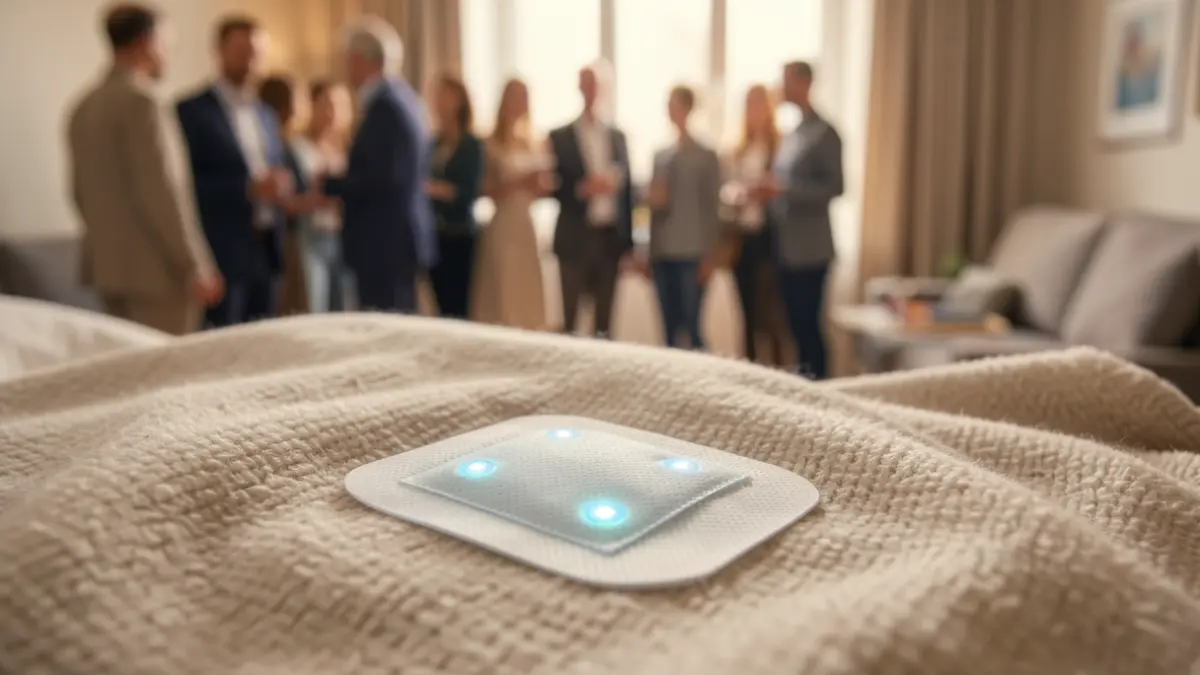
The study, supported by the NIHR Biomedical Research Centre: Oxford, indicates that wearable chest patches can enhance the reliability and reduce the burden of remote monitoring. These devices capture vital-sign data consistently, eliminating the need for patients or carers to perform repeated manual measurements.
This 'passive monitoring' approach is considered particularly beneficial for the care of older or frail patients, aligning with the NHS priority to transition more care from hospitals into the community. The research involved 26 adult patients under the care of Oxford University Hospitals (OUH) NHS Foundation Trust’s acute Hospital at Home (aH@H) service, who were being treated for various acute conditions including infections and heart failure.
Patients participating in the trial wore a VitalPatch device for up to seven days. This patch automatically measured their heart rate and breathing rate, with data transmitted in real-time to their hospital-based healthcare team. Heart-rate readings were successfully captured in 89% of four-hour monitoring periods, and breathing rates in 75%.
In contrast, manual measurements of oxygen levels, blood pressure, and temperature, taken by patients or carers using additional equipment, were recorded by just over half of the patients daily.
“"While this was a small, non-randomised study in one NHS trust, it did show that it is possible for healthcare teams based in hospitals to monitor people at home using clinical grade wearable devices, and particularly with devices that require little active involvement. We found that more data were received from the automated wearable patch than when patients had to record measurements themselves."
Professor Daniel Lasserson, an OUH Hospital at Home physician and Professor of Acute Ambulatory Care at Warwick Medical School, stated that the findings demonstrate a way to go beyond current guidance and provide more comprehensive monitoring for patients treated at home. He added that real-time data from wearable technology would offer clinical teams a fuller picture of a patient’s condition, enabling earlier identification of deterioration and more focused home visits.
Professor Andrew Farmer from the Nuffield Department of Primary Care Health Sciences highlighted the challenge of providing continuous observation for patients cared for at home. He noted that this study contributes to answering how healthcare teams can gain the necessary information to assess patient recovery or deterioration remotely.
The research team emphasised the need for further studies to determine which patients benefit most from remote monitoring, whether passive monitoring alone is sufficient, and the cost-effectiveness and impact on care quality of this approach. Support for the research was provided by the NIHR Applied Research Collaboration West Midlands and the NIHR Community Healthcare HealthTech Research Centre.